Welcome to the History page of the Village of Le Marais Perdu, seat of Fausse Pointe Parish. Our community has stood at this landing for more than two hundred and fifty years. The Village was incorporated in 1899 under the Lawrason Act and is governed by a Mayor and three Aldermen. Below you will find a historical sketch prepared for our Centennial in 1999, together with a timeline of important dates and the roll of our Mayors. For questions regarding Village records, please contact the Village Clerk.
Page last updated March 4, 2009. (Site refreshed January 2026 — content unchanged.)
Prepared by the Centennial Committee for the Centennial of Incorporation, 1899–1999. This sketch draws upon the centennial history published by the parish's weekly newspaper in 1968, and upon the recollections of our elder residents.
The First Landing. A French landing was established at this place about 1751 — a small post of perhaps thirty households, with an oratory and a wharf, in the wet country east of the Teche settlements. It did not endure. By 1766 the landing stood abandoned, its people lost to the fevers of that hard country, and the site lay empty for the better part of a century. The name by which the place came to be known — Le Marais Perdu — dates from those years.
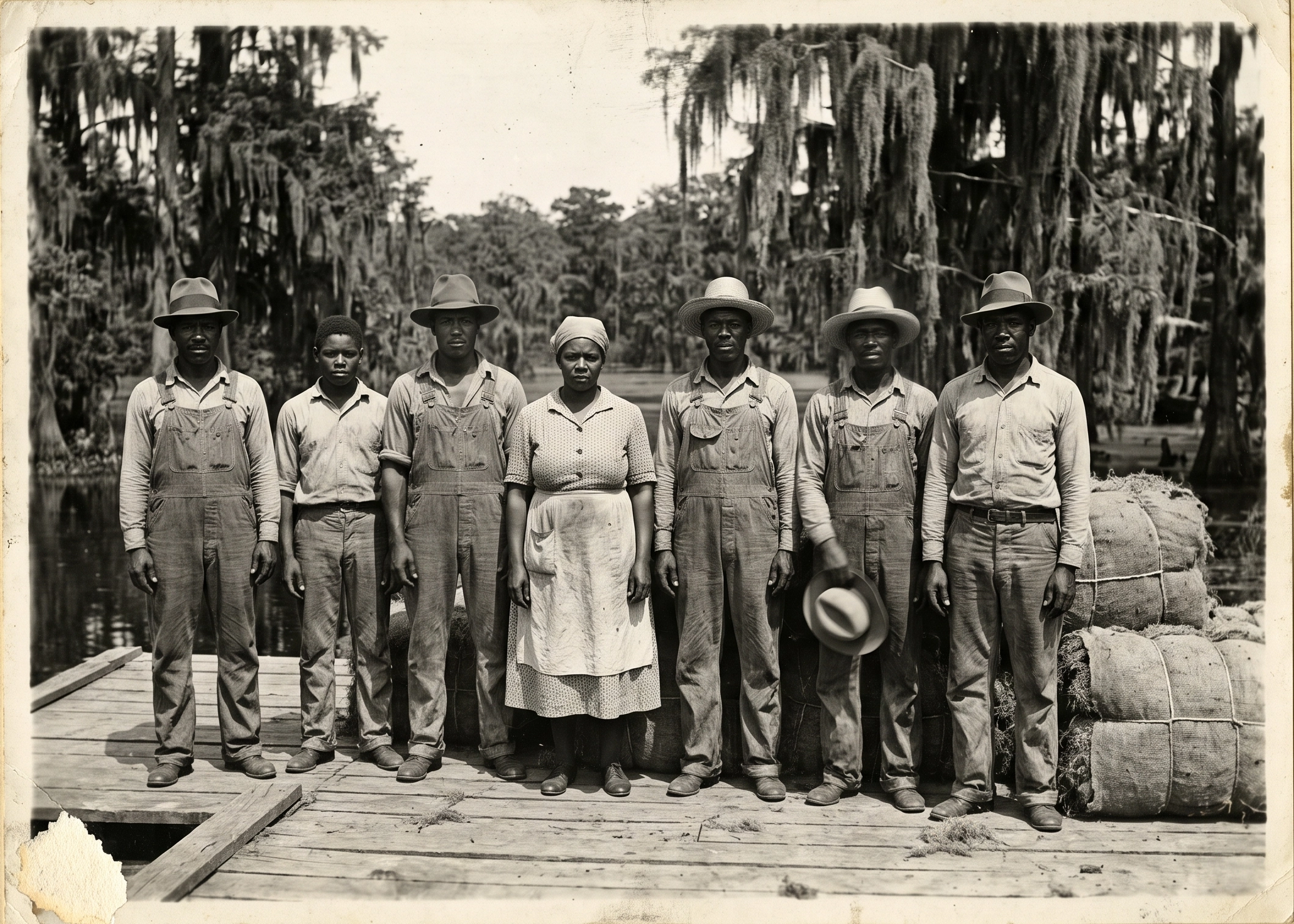
Settlement. Beginning in the late 1840s, the landing was settled anew, principally by Irish families arriving through New Orleans, joined over the years by families from Wales, Cornwall, the Isle of Man, and the Scottish Highlands. They came for the moss. The gathering and curing of Spanish moss was the country's first industry, and our community shipped cured moss from this landing by the 1850s. The boarding house by the landing, La Maison de Repos, was already standing in those years and stands today, the oldest establishment in the Village.
Through the providence of God and the labor of its people, the settlement grew. A mission was served here from the 1850s, and the Church of St. Brendan the Navigator was dedicated in 1871.
The Parish. By act of the Legislature in 1868, the lands east of the Teche settlements were organized as Fausse Pointe Parish, with its seat at Le Marais Perdu. The measure was sponsored by Sen. A. Delahoussaye. A police jury was seated, a courthouse raised, and the affairs of the swamp country were thereafter administered from this landing.
The Village itself was incorporated in 1899, among the first communities in Louisiana to organize under the new Lawrason Act, with a Mayor and three Aldermen. The parish's weekly newspaper, established 1887, was designated the Official Journal of Fausse Pointe Parish in 1911. The moss gin opened in 1889, and in those years the landing handled moss, cypress, fish, and ice.
High Water and the Levee. The high water of 1927, which devastated the Basin and its settlements, largely spared the Village, though the surrounding country suffered greatly and many families sheltered here in that season. In the years that followed, the great flood-control works remade the Basin. Amid those works and the administrative changes of 1931, the Village continued as before, its charter unchanged. The protection levee, completed in the mid-1930s, separated the Village from the open Basin and from its landing trade for fifteen difficult years.
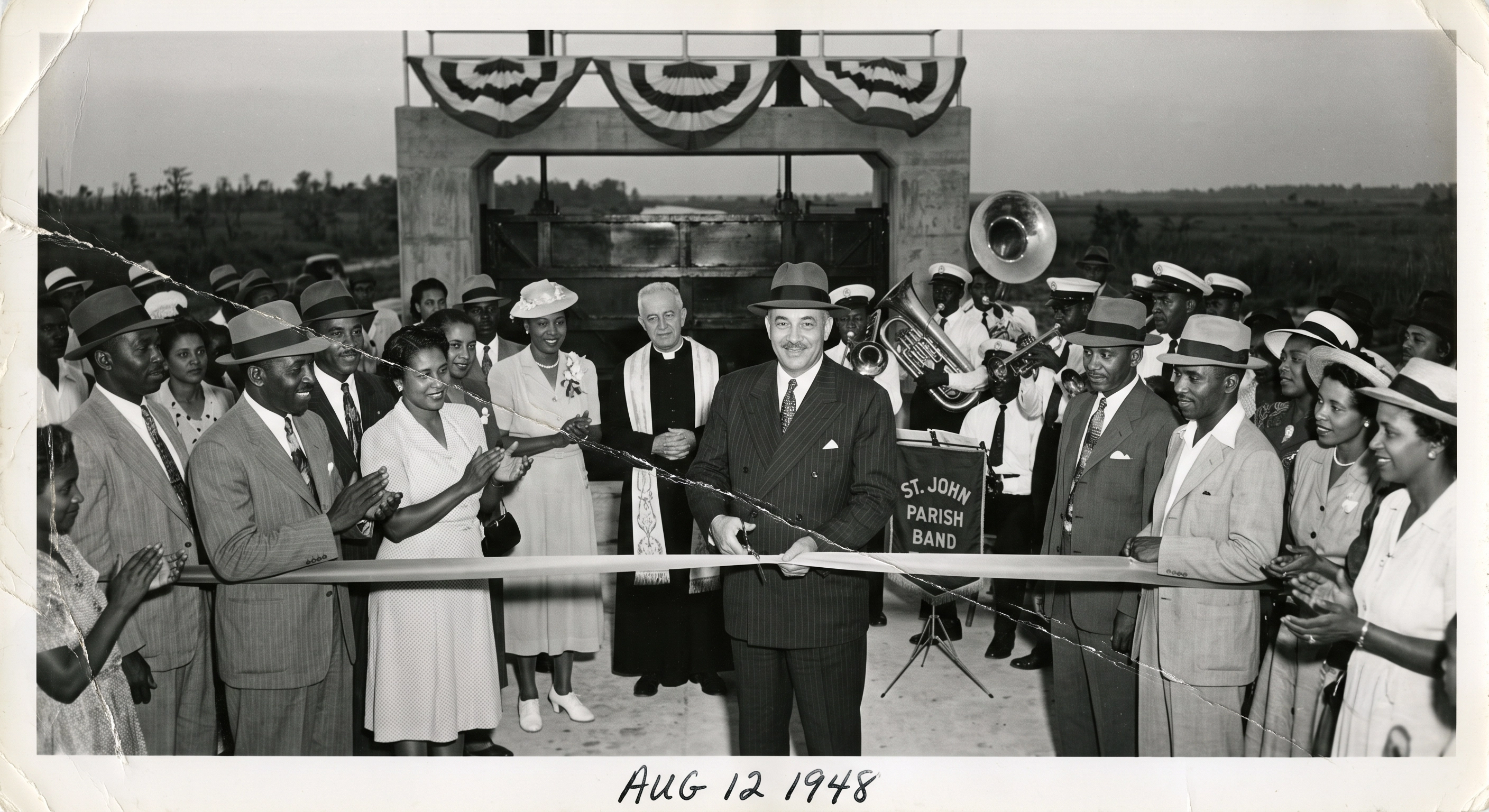
The Cut. The opening of the Sarrazin Cut in 1948 was the longest civic campaign in the Village's history, pursued through a decade of petitions by Mayor Rowan and the petition committees, for the relief of the moss and fisheries trade. The gate restored the Village's access to the water, and the Feu Follet Festival, revived the following year, has opened its season on the first weekend of October ever since, with the boat parade passing through the Cut each year.
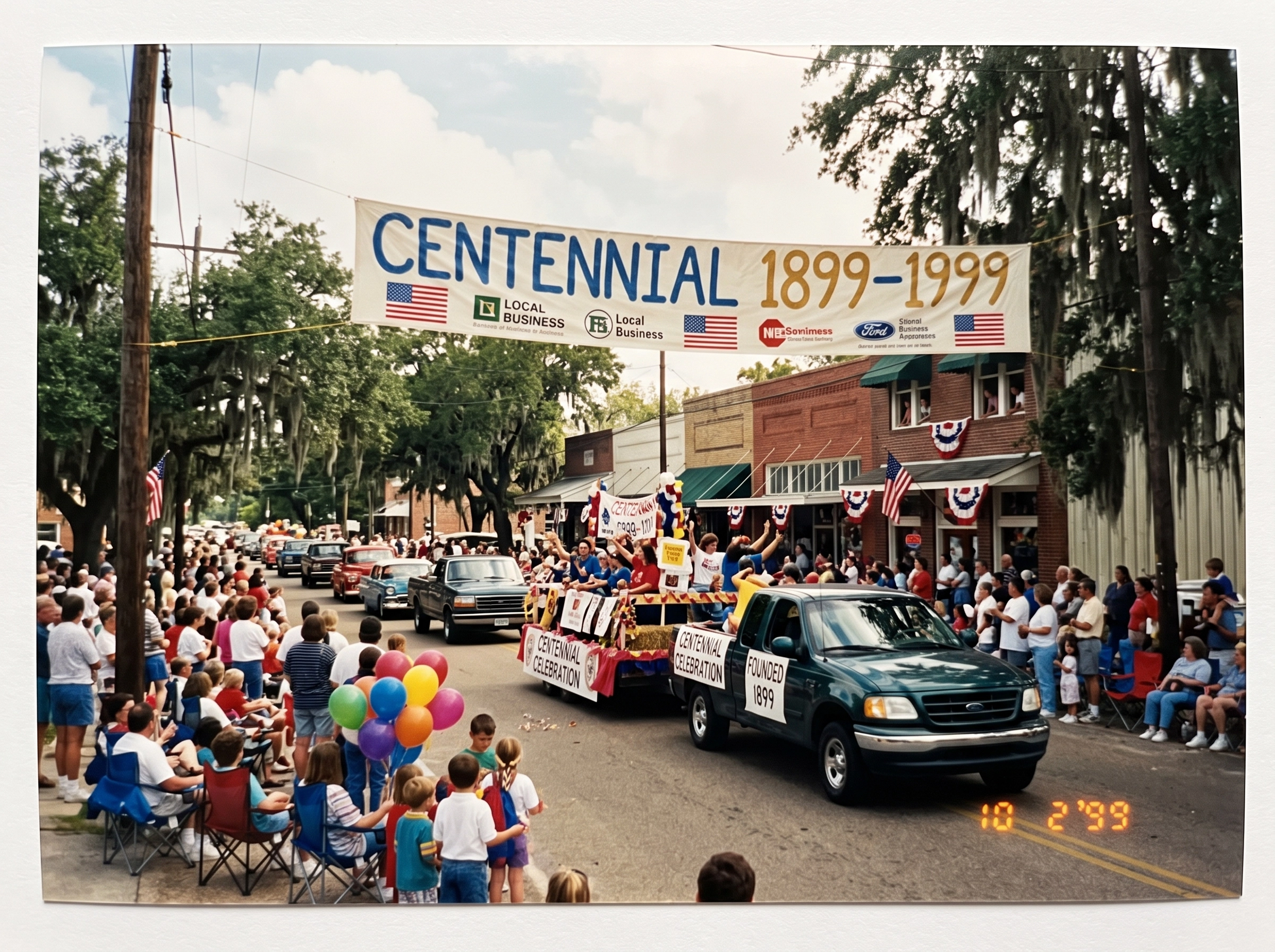
Modern Times. The moss gin closed in 1957. The oil years of the 1970s and early 1980s brought employment and improvements: Landing Road was paved in 1975, and the Village acquired its first modern fire truck in 1978. The Village celebrated its Centennial of Incorporation in 1999 with a full week of festivities.
The story of Le Marais Perdu is the story of its families, many of whom have been here since the first years of settlement, and whose names appear throughout this sketch and throughout our cemetery, our honor rolls, and our public life. It is their Village.
| 1899–1908 | Aristide Cullen |
| 1908–1917 | Télesphore Darragh |
| 1917–1926 | Placide Ashe |
| 1926–1935 | Onézime Cullen |
| 1935–1948 | Émile Doyle |
| 1948–1956 | Marcellin Rowan |
| 1956–1968 | Léonce Doyle |
| 1968–1976 | Théophile Ashe |
| 1976–1984 | Octave Cullen |
| 1984–1992 | Eulalie Rowan (first woman to hold the office) |
| 1992– | Hippolyte "Paul" Doyle |
For current Village officials, see the Officials page.
| c. 1751 | French landing established |
| 1766 | Landing found abandoned |
| 1840s–1850s | Settlement renewed; moss trade begins |
| 1868 | Fausse Pointe Parish organized; parish seat named |
| 1871 | Church of St. Brendan the Navigator dedicated |
| 1887 | Weekly newspaper established |
| 1889 | Moss gin opens |
| 1899 | Village incorporated (Lawrason Act) |
| 1911 | Newspaper designated Official Journal |
| 1927 | High water; Village largely spared |
| 1931 | Charter reaffirmed by resolution |
| 1933–1936 | Protection levee constructed |
| 1948 | Sarrazin Cut opens |
| 1949 | Feu Follet Festival revived |
| 1957 | Moss gin closes |
| 1975 | Landing Road paved |
| 1978 | First modern fire truck acquired |
| 1999 | Centennial of Incorporation celebrated |
| 2004 | Perdu School consolidated |
| 2009 | Village web site launched |
For questions regarding Village records, contact the Office of the Village Clerk, Village Hall, Le Marais Perdu, Louisiana.
© 2009–2026 · www.villageoflemaraisperdu.org · This site is maintained as required.
Page last updated 3/4/2009.